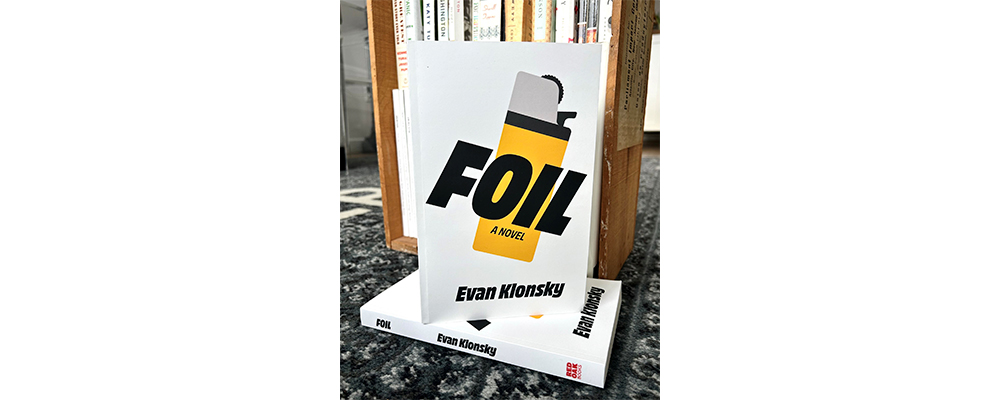
At first, I found the premise kind of funny: A paranoid twenty-something named Sam uses a golf club to take down a terrorist. Sam is very much going through it at the time—lost in his career, on shaky ground with his girlfriend Audrey. He’s feuding with his family and self-medicating his depression, and it’s out of this fractured place that he unleashes on the attacker.
Sam is the unlikely hero who saves the day. But he takes it so far he’s undone by the weight of his own actions.
Sitting down to write, I quickly realized I had something bigger on my hands than a simple comedic premise. Sam could act as a vessel for what’s variously called toxic masculinity or the male loneliness epidemic; he’s refused all of Audrey’s pleas to seek mental health treatment. How would someone like that handle—or fail to handle—the ensuing 48 hours? How would his closest friends and family react? What would Audrey think?
She’s excited for him at first. She prays this is the reversal of fortunes they’ve been desperately needing. But then she sees the strangeness of Sam’s response, the drugs he continues to try to hide from her. Is their relationship too fragile to survive this new stress test?
Then there are the characters on the other side of the violence. Who’s this teenage domestic terrorist from Queens named Xander? Why does he strap on a suicide vest and park himself in the middle of one of the busiest transit centers in the country? That’s where his close friend Holly comes in. He leaves her with a set of journal entries that hold some clues. But they also contain a heartbreaking account of her friend unraveling. And she’s dealing with enough already in the wake of her parents’ divorce.
What this all amounts to is a set of characters thrown into the high-stakes aftermath of a domestic terrorism incident—four narrators grappling with the pressures of social media, anxiety and depression, societal norms, and varying degrees of family dysfunction.
I wrote this book to examine these themes and more, but also as a way to process my relation to those same issues and place in the world.
For those who know me, it won’t be difficult to see me in Sam. By placing him under the white-hot light of sudden fame, by embellishing and raising the stakes for him and all the characters, I set out to do the thing that reading fiction has done for me—to draw out the humanity that might go unexamined in the absence of such pressure.
This gives rise to a novel that can be brutally honest and tragic at times. But one that, I hope, leaves behind some trace of redemption.
 Evan Klonsky